A container of ceramic tiles leaves a factory outside Foshan and ends up in a distribution warehouse in Leeds. Between those two doors, a dozen separate bills get paid: export customs, the truck to the terminal, terminal handling at both ends, the ocean freight itself, marine insurance, import duty and VAT, the last-mile delivery. The three-letter Incoterm printed on the quotation decides which of those land on the seller's invoice and which land on the buyer's.
Most arguments about freight invoices are not really about freight. They are about assumptions. The buyer assumed the seller's price included loading. The seller assumed the buyer knew that destination terminal charges were on their account. A term chosen deliberately, written with a place name attached, settles most of that before the container is ever stuffed.
What the three letters actually decide
Incoterms are published by the International Chamber of Commerce. The current edition is Incoterms 2020, and it contains eleven rules. Seven work for any mode of transport; four — FAS, FOB, CFR and CIF — are reserved for sea and inland waterway carriage. Each rule allocates four things: export clearance, the main carriage, insurance, and import clearance with duty. It also fixes the exact moment risk passes from seller to buyer.
What Incoterms do not do is equally important. They say nothing about when payment falls due, who holds title to the goods, which law governs the contract, or how a quality claim is handled. Those belong in the sales contract. And a term without a place is not a term at all: FOB Shanghai means something, FOB on its own means an argument. Add the year as well, because 2010-era templates are still circulating and the details have shifted.
The four sea-only rules
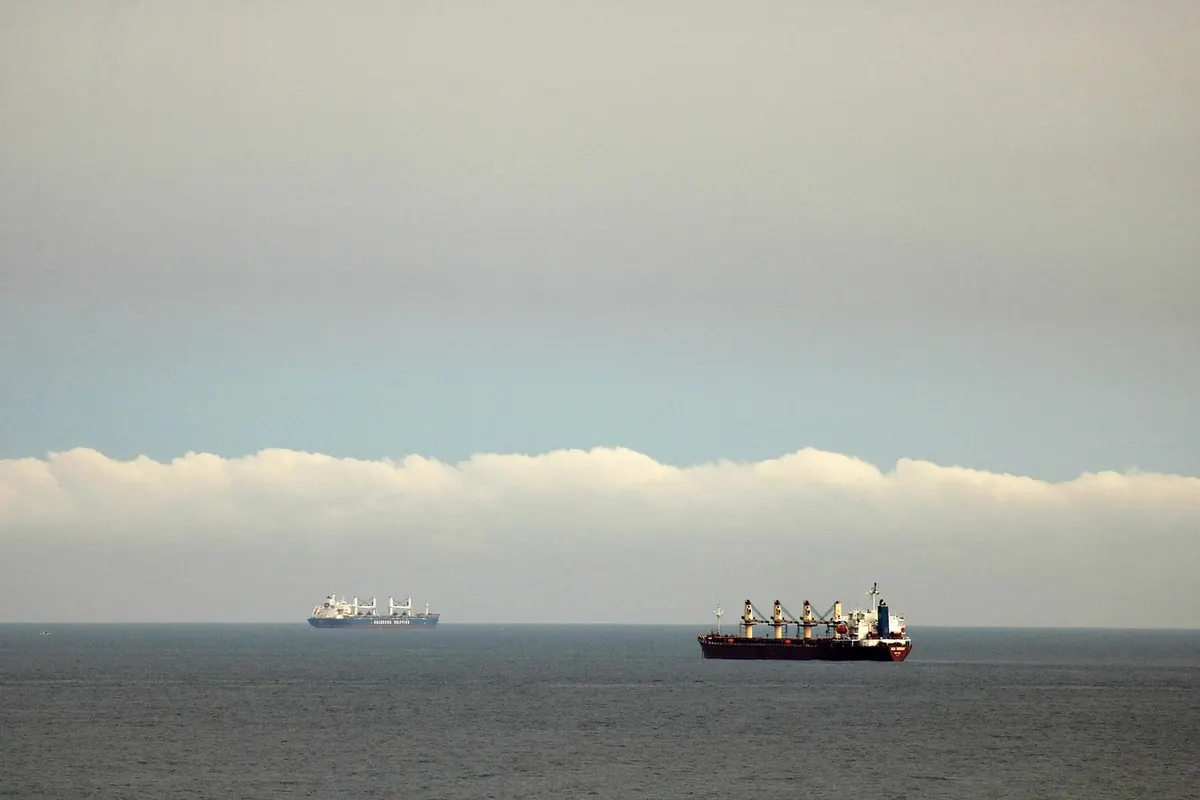
These were written for cargo that physically crosses a ship's rail: bulk, breakbulk, project loads, steel coils, bagged grain.
FAS and FOB
Under FAS (Free Alongside Ship) the seller clears the goods for export and places them alongside the vessel at the named port. Risk passes there. It suits heavy lift and awkward project cargo where loading is the buyer's responsibility. Under FOB (Free On Board) the seller also gets the cargo on board, and risk passes at that point. The buyer books and pays the ocean freight, arranges insurance, and handles import clearance and onward delivery.
CFR and CIF
Here is the split that trips people up. With CFR the seller pays the ocean freight to the destination port, but risk still passes when the goods are on board at origin. The seller is paying for a voyage during which the buyer already carries the risk. If the cargo is lost mid-ocean, the buyer claims on insurance; the seller does not carry the loss just because they booked the ship. CIF adds insurance, but only the minimum: Institute Cargo Clauses (C), a narrow cover that excludes a great deal. Under Incoterms 2020, CIP requires the wider (A) cover while CIF still requires only (C), so if you want proper protection under CIF, write the cover level into the contract.
Why FOB often misfires in container trade
FOB was designed for the ship's rail. In containerised trade the seller usually hands the box to a carrier at a terminal or inland depot well before the vessel loads. Under a strict FOB reading, the seller carries risk through a stretch of terminal time they do not control, and origin terminal handling charges become a recurring point of friction, billed inconsistently from port to port.
FCA (Free Carrier) fits containers better. Risk passes when the goods are handed to the carrier the buyer nominated, at a named place. Incoterms 2020 added an option allowing the parties to agree that the buyer instructs the carrier to issue an on-board bill of lading to the seller after loading — handy when a letter of credit demands an on-board B/L. It works, but flag it to your forwarder and bank at booking, not at document presentation.
The door-delivery rules
DAP puts the goods at the buyer's named place, ready for unloading, with import clearance and duty on the buyer. DPU replaced DAT in 2020 and is the only rule where the seller unloads. DDP goes furthest: the seller clears import and pays duty, delivering ready for unloading.
DDP deserves a warning. It requires the seller to act as importer of record, which in many countries means a local tax registration or a fiscal representative. A seller who cannot legally import into the destination country has promised something they cannot deliver, and the cargo can sit at the port accruing storage while everyone argues. If import formalities are the sticking point, DAP plus a separate arrangement with the buyer's customs broker is usually the calmer route. Customs and tax treatment varies by country; confirm the specifics with a licensed broker before you commit.
Who pays for what: a working reference
- EXW — buyer does everything from the seller's premises, including export clearance, which a foreign buyer often cannot handle. Rarely the right answer for exports.
- FCA — seller clears export and delivers to the carrier; buyer pays main carriage, insurance, import duty and final delivery.
- FAS — seller clears export and places goods alongside the vessel; buyer loads and pays from there.
- FOB — seller clears export and loads on board; buyer pays ocean freight, insurance, import duty, destination charges and onward delivery.
- CFR — seller pays export clearance and ocean freight to the destination port; buyer insures from the origin risk point, pays import duty and delivery.
- CIF — as CFR, with minimum marine insurance arranged by the seller.
- CPT — seller pays carriage to the named destination; risk passes at handover to the first carrier.
- CIP — as CPT with wider (A) cover insurance from the seller.
- DAP — seller pays everything to the named place except import clearance, duty and unloading.
- DPU — as DAP, and the seller also unloads.
- DDP — seller pays everything including import duty; buyer simply receives.
Where the money quietly leaks
Three predictable gaps. First, terminal handling: origin THC is sometimes absorbed into the ocean freight and sometimes billed separately, and destination THC is frequently excluded from a headline rate. Ask for a full quotation broken down to the destination door, charges named. Second, demurrage and detention. Incoterms do not allocate free time or late-pickup costs, so agree the free days and who bears the risk of a missed slot in the contract. Third, insurance. A CIF shipment covered at (C) will not respond to many of the losses a buyer assumes are covered, and the shortfall only surfaces at claim time.
Choosing and writing the term
- Decide where you want risk to move, not just where you want cost to stop. The two are not the same under CFR, CIF, CPT and CIP.
- Match the rule to the cargo. Bulk and breakbulk: FAS, FOB, CFR or CIF. Containers: FCA, CPT or CIP, with D-terms when the seller controls the whole move.
- Name the place precisely — a port, a depot, a full street address. Vague places create vague handovers.
- Put the extras in the contract: insurance cover level, free time at both ends, who pays destination terminal charges, and how demurrage is shared.
None of this replaces the ICC text itself, which is short and worth reading once with your forwarder and customs broker alongside. Get the term right at quotation stage and the invoice at the end of the voyage tends to look exactly as expected.
Photo: AymaneJed / Pixabay